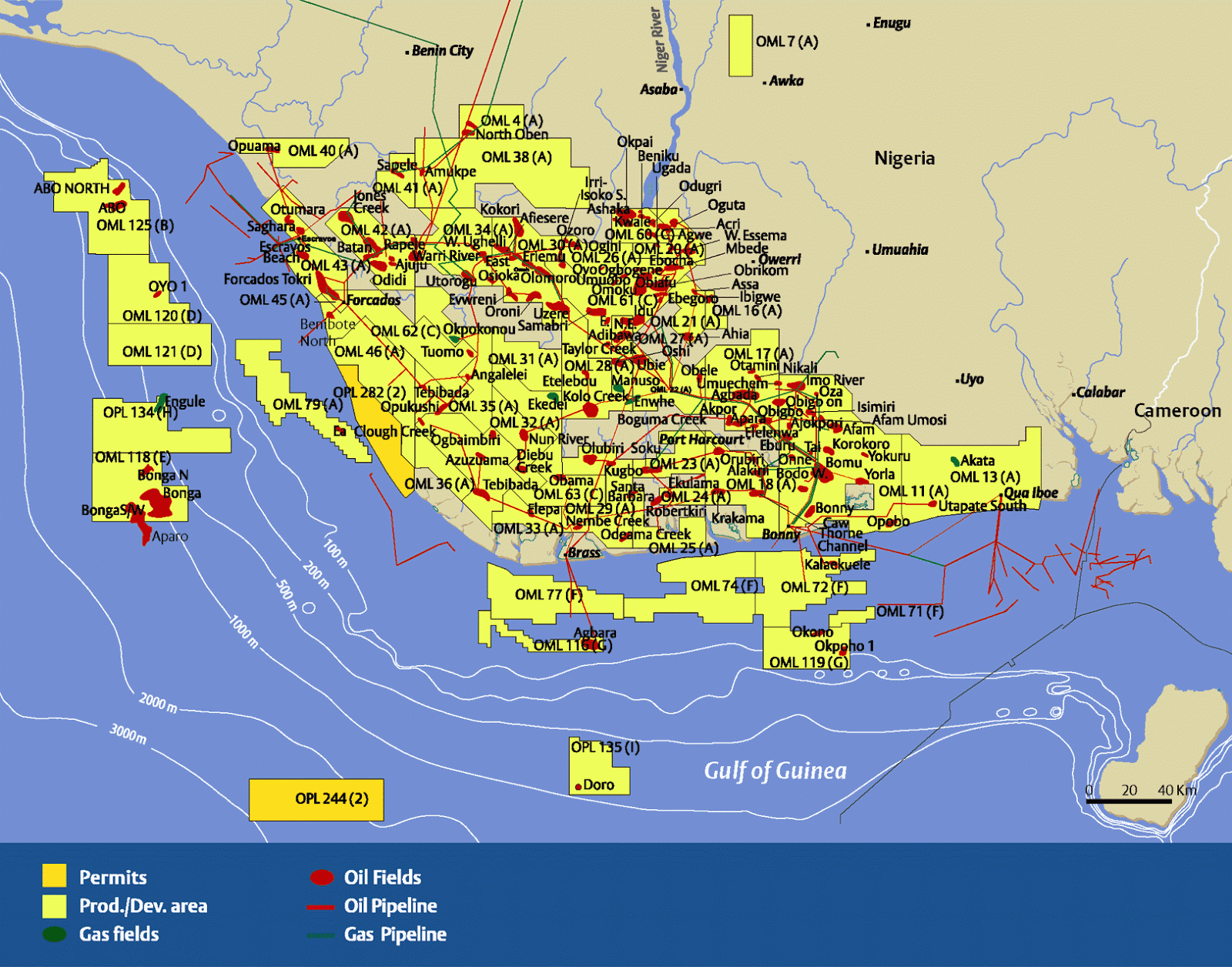
Nigeria's Largest Export: Uncover Hidden Truths And Insights
Nigeria's largest export is crude oil, which accounts for over 90% of the country's total exports.
The oil industry is vital to Nigeria's economy, providing the government with the majority of its revenue. Oil production has also led to the development of other industries, such as petrochemicals and refining. However, the reliance on oil has also made Nigeria vulnerable to fluctuations in the global oil price.
In recent years, the government has been working to diversify the economy and reduce its dependence on oil. This has included promoting the development of agriculture, manufacturing, and tourism.
nigeria's largest export
Nigeria's largest export is crude oil, which accounts for over 90% of the country's total exports. The oil industry is vital to Nigeria's economy, providing the government with the majority of its revenue. However, the reliance on oil has also made Nigeria vulnerable to fluctuations in the global oil price.
- Economic importance
- Government revenue
- Economic vulnerability
- Environmental impact
- Political instability
- Corruption
- Economic diversification
- Sustainable development
The key aspects of Nigeria's largest export are closely interconnected. For example, the economic importance of oil has led to government revenue, but it has also made the country vulnerable to economic shocks. The environmental impact of oil production has contributed to political instability and corruption. Economic diversification is seen as a way to reduce Nigeria's reliance on oil and promote sustainable development.
Economic importance
The economic importance of Nigeria's largest export, crude oil, cannot be overstated. Oil accounts for over 90% of the country's total exports, and provides the government with the majority of its revenue. This revenue is used to fund public services, such as education, healthcare, and infrastructure. Oil has also led to the development of other industries, such as petrochemicals and refining.
- Government revenue
Oil revenue is essential for the Nigerian government to function. It is used to fund public services, such as education, healthcare, and infrastructure. Without oil revenue, the government would be unable to provide these essential services.
- Economic growth
The oil industry has been a major driver of economic growth in Nigeria. It has led to the development of other industries, such as petrochemicals and refining. These industries have created jobs and stimulated economic growth.
- Foreign exchange
Oil exports are a major source of foreign exchange for Nigeria. This foreign exchange is used to import goods and services that are not produced domestically. It is also used to repay foreign debt.
- Investment
The oil industry has attracted significant investment to Nigeria. This investment has helped to develop the country's infrastructure and create jobs.
The economic importance of Nigeria's largest export is clear. Oil has been a major driver of economic growth and development in the country. However, the reliance on oil has also made Nigeria vulnerable to fluctuations in the global oil price.
Government revenue
Government revenue is essential for the functioning of any modern state. It is used to fund public services, such as education, healthcare, and infrastructure. In Nigeria, the largest source of government revenue is crude oil exports.
The importance of government revenue cannot be overstated. Without it, the government would be unable to provide essential services to its citizens. In Nigeria, oil revenue has been used to fund a wide range of public services, including education, healthcare, and infrastructure. Oil revenue has also been used to reduce poverty and inequality.
However, the reliance on oil revenue has also made Nigeria vulnerable to fluctuations in the global oil price. When the oil price falls, government revenue falls as well. This can lead to economic instability and social unrest.
In recent years, the Nigerian government has been working to diversify its sources of revenue. This includes promoting the development of other industries, such as agriculture, manufacturing, and tourism. The government is also working to reduce its dependence on oil revenue by increasing tax revenue and improving tax collection.
Economic vulnerability
Nigeria's largest export, crude oil, has made the country vulnerable to economic shocks. This is because the global oil price is volatile and can fluctuate significantly in a short period of time. When the oil price falls, Nigeria's export earnings fall as well. This can lead to a number of economic problems, including:
- Reduced government revenue
Oil revenue is the main source of government revenue in Nigeria. When the oil price falls, government revenue falls as well. This can lead to a budget deficit and make it difficult for the government to provide essential services, such as education, healthcare, and infrastructure.
- Currency devaluation
When the oil price falls, the Nigerian naira often devalues against other currencies. This makes it more expensive for Nigeria to import goods and services, which can lead to inflation.
- Job losses
The oil industry is a major employer in Nigeria. When the oil price falls, oil companies often lay off workers. This can lead to job losses and increased unemployment.
- Social unrest
Economic problems can lead to social unrest. In Nigeria, there have been a number of protests and riots in recent years due to the economic crisis caused by the fall in the oil price.
The economic vulnerability of Nigeria is a major challenge for the country. The government is working to diversify the economy and reduce its dependence on oil. However, this is a complex and challenging task. In the meantime, Nigeria remains vulnerable to the vagaries of the global oil market.
Environmental impact
The environmental impact of nigeria's largest export, crude oil, is a major concern. Oil production and refining can pollute the air, water, and soil. Oil spills can also damage marine ecosystems and coastal communities.
The environmental impact of oil production in Nigeria has been well-documented. Air pollution from oil refineries and gas flaring has been linked to respiratory problems, including asthma and bronchitis. Water pollution from oil spills and wastewater discharge has contaminated drinking water sources and killed fish. Oil spills have also damaged mangrove forests and other coastal ecosystems.
The environmental impact of oil production in Nigeria is a major challenge for the country. The government is working to regulate the oil industry and reduce its environmental impact. However, this is a complex and challenging task. In the meantime, the environmental impact of oil production continues to be a major concern for Nigerians.
Political instability
Political instability is a major challenge for Nigeria. The country has a history of military coups and political violence. In recent years, the country has been plagued by the Boko Haram insurgency. Political instability has a negative impact on the economy and the lives of ordinary Nigerians.
- Corruption
Corruption is a major problem in Nigeria. It undermines the rule of law and makes it difficult for businesses to operate. Corruption also diverts public funds away from essential services, such as education and healthcare.
- Weak institutions
Nigeria's institutions are weak and ineffective. This makes it difficult for the government to maintain law and order and provide essential services. Weak institutions also make it easier for corrupt officials to operate with impunity.
- Ethnic and religious divisions
Nigeria is a diverse country with over 250 ethnic groups and 500 languages. These divisions can lead to conflict and violence. Ethnic and religious divisions can also make it difficult for the government to build a cohesive national identity.
- Poverty and inequality
Poverty and inequality are major problems in Nigeria. Over 40% of Nigerians live below the poverty line. Poverty and inequality can lead to social unrest and political instability.
Political instability is a major challenge for Nigeria. It undermines the economy, the rule of law, and the lives of ordinary Nigerians. The government needs to address the root causes of political instability in order to build a more stable and prosperous future for the country.
Corruption
Corruption is a major problem in Nigeria. It undermines the rule of law and makes it difficult for businesses to operate. Corruption also diverts public funds away from essential services, such as education and healthcare.
The connection between corruption and nigeria's largest export, crude oil, is complex. Oil revenues are a major source of government revenue in Nigeria. However, corruption can lead to the misappropriation of oil revenues. This can deprive the government of much-needed funds and lead to economic problems.
For example, in 2014, it was estimated that Nigeria lost over $20 billion to corruption in the oil and gas sector. This money could have been used to fund essential services, such as education and healthcare. Instead, it was stolen by corrupt officials.
Corruption also creates an environment of uncertainty for businesses. When businesses are unsure whether they will be treated fairly by the government, they are less likely to invest and create jobs. This can lead to economic stagnation and poverty.
The fight against corruption is essential for Nigeria's economic development. The government needs to take steps to strengthen the rule of law and reduce corruption in the oil and gas sector. This will help to ensure that oil revenues are used for the benefit of all Nigerians.
Economic diversification
Economic diversification is a strategy that countries use to reduce their dependence on a single industry or a few primary exports. This can help to reduce economic vulnerability and promote sustainable growth. In the case of Nigeria, economic diversification is seen as a way to reduce the country's dependence on oil exports.
Oil has been a major driver of economic growth in Nigeria, but the reliance on oil has also made the country vulnerable to fluctuations in the global oil price. When the oil price falls, Nigeria's export earnings fall as well. This can lead to economic problems, such as reduced government revenue, currency devaluation, and job losses.
To reduce its dependence on oil, Nigeria is promoting the development of other industries, such as agriculture, manufacturing, and tourism. The government is also working to improve the business environment and attract foreign investment.
Economic diversification is a complex and challenging process. However, it is essential for Nigeria to reduce its dependence on oil and promote sustainable economic growth.
Sustainable development
Sustainable development is a pattern of economic growth that meets the needs of the present without compromising the ability of future generations to meet their own needs. In the case of Nigeria, sustainable development is essential for ensuring that the country's oil wealth benefits all Nigerians, both now and in the future.
- Environmental sustainability
The oil industry has a significant environmental impact, including air and water pollution, deforestation, and climate change. Sustainable development requires that the oil industry be developed in a way that minimizes these impacts.
- Economic sustainability
The oil industry is a major source of revenue for Nigeria. However, the reliance on oil has made the country vulnerable to fluctuations in the global oil price. Sustainable development requires that the country diversify its economy and reduce its dependence on oil.
- Social sustainability
The oil industry can have a negative impact on social development, including displacement of communities, disruption of livelihoods, and conflict. Sustainable development requires that the oil industry be developed in a way that benefits local communities and promotes social justice.
- Cultural sustainability
The oil industry can have a negative impact on cultural heritage, including the destruction of sacred sites and the erosion of traditional practices. Sustainable development requires that the oil industry be developed in a way that respects and preserves cultural heritage.
Sustainable development is essential for ensuring that Nigeria's oil wealth benefits all Nigerians, both now and in the future. The government, the oil industry, and civil society organizations all have a role to play in promoting sustainable development in the oil sector.
FAQs about Nigeria's Largest Export
Nigeria's largest export is crude oil, which accounts for over 90% of the country's total exports. The oil industry is vital to Nigeria's economy, providing the government with the majority of its revenue. However, the reliance on oil has also made Nigeria vulnerable to fluctuations in the global oil price.
Question 1: What are the benefits of Nigeria's oil industry?
Answer: The oil industry provides the Nigerian government with the majority of its revenue, which is used to fund public services, such as education, healthcare, and infrastructure. The oil industry has also led to the development of other industries, such as petrochemicals and refining.
Question 2: What are the risks of Nigeria's reliance on oil?
Answer: The reliance on oil has made Nigeria vulnerable to fluctuations in the global oil price. When the oil price falls, Nigeria's export earnings fall as well. This can lead to economic problems, such as reduced government revenue, currency devaluation, and job losses.
Question 3: What is the government doing to reduce its dependence on oil?
Answer: The government is promoting the development of other industries, such as agriculture, manufacturing, and tourism. The government is also working to improve the business environment and attract foreign investment.
Question 4: What are the challenges to economic diversification in Nigeria?
Answer: Economic diversification is a complex and challenging process. Some of the challenges include the lack of infrastructure, a skilled workforce, and access to finance.
Question 5: What is sustainable development?
Answer: Sustainable development is a pattern of economic growth that meets the needs of the present without compromising the ability of future generations to meet their own needs.
Question 6: How can Nigeria achieve sustainable development in the oil sector?
Answer: Sustainable development in the oil sector requires that the industry be developed in a way that minimizes environmental impacts, promotes economic diversification, and benefits local communities.
Summary of key takeaways or final thought: Nigeria's oil industry is a major source of revenue for the government, but the reliance on oil has also made the country vulnerable to fluctuations in the global oil price. The government is working to diversify the economy and reduce its dependence on oil. However, economic diversification is a complex and challenging process. Sustainable development in the oil sector requires that the industry be developed in a way that minimizes environmental impacts, promotes economic diversification, and benefits local communities.
Transition to the next article section: The next section of this article will discuss the history of the oil industry in Nigeria.
Tips for Understanding Nigeria's Largest Export
Nigeria's largest export is crude oil, which accounts for over 90% of the country's total exports. The oil industry is vital to Nigeria's economy, but it is also a major source of environmental and social problems.
Here are five tips for understanding Nigeria's largest export:
Tip 1: Understand the history of the oil industry in Nigeria.
The oil industry in Nigeria began in the early 20th century, when British companies discovered oil in the Niger Delta. The industry grew rapidly in the following decades, and by the 1970s, Nigeria was one of the world's leading oil exporters.
Tip 2: Understand the environmental impact of the oil industry.
The oil industry has a significant environmental impact, including air and water pollution, deforestation, and climate change. Oil spills are a particular problem in Nigeria, and they have caused widespread damage to the environment and local communities.
Tip 3: Understand the social impact of the oil industry.
The oil industry has a significant social impact, including displacement of communities, disruption of livelihoods, and conflict. The oil industry has also led to increased corruption and inequality in Nigeria.
Tip 4: Understand the economic impact of the oil industry.
The oil industry is a major source of revenue for the Nigerian government. However, the reliance on oil has also made Nigeria vulnerable to fluctuations in the global oil price. When the oil price falls, Nigeria's export earnings fall as well. This can lead to economic problems, such as reduced government revenue, currency devaluation, and job losses.
Tip 5: Understand the challenges facing the oil industry in Nigeria.
The oil industry in Nigeria faces a number of challenges, including insecurity, corruption, and environmental degradation. These challenges make it difficult for the industry to operate sustainably and contribute to the long-term development of Nigeria.
Summary of key takeaways or benefits:
By understanding these five tips, you will be better equipped to understand the complex issues surrounding Nigeria's largest export. This knowledge will help you to make informed decisions about the future of the oil industry in Nigeria.
Transition to the article's conclusion:
The oil industry is a major part of Nigeria's economy, but it also poses significant environmental and social challenges. By understanding the issues surrounding the oil industry, we can make informed decisions about its future and ensure that it benefits all Nigerians.
Conclusion
Nigeria's largest export, crude oil, has had a profound impact on the country's economy, environment, and society. The oil industry has provided the government with much-needed revenue, but it has also led to environmental degradation, social conflict, and economic vulnerability.
It is important to understand the complex issues surrounding Nigeria's largest export in order to make informed decisions about the future of the oil industry. By addressing the environmental, social, and economic challenges facing the industry, we can ensure that it benefits all Nigerians, both now and in the future.
Unveiling The Enduring Bond: Exploring The Relationship Of Josh Hutcherson And Claudia Traisac
Unveil The Secrets Of The Music Triangle: Discoveries And Insights For Your Music
Unveiling Kevin Hart's Financial Empire: Discover His Net Worth And Wealth Secrets