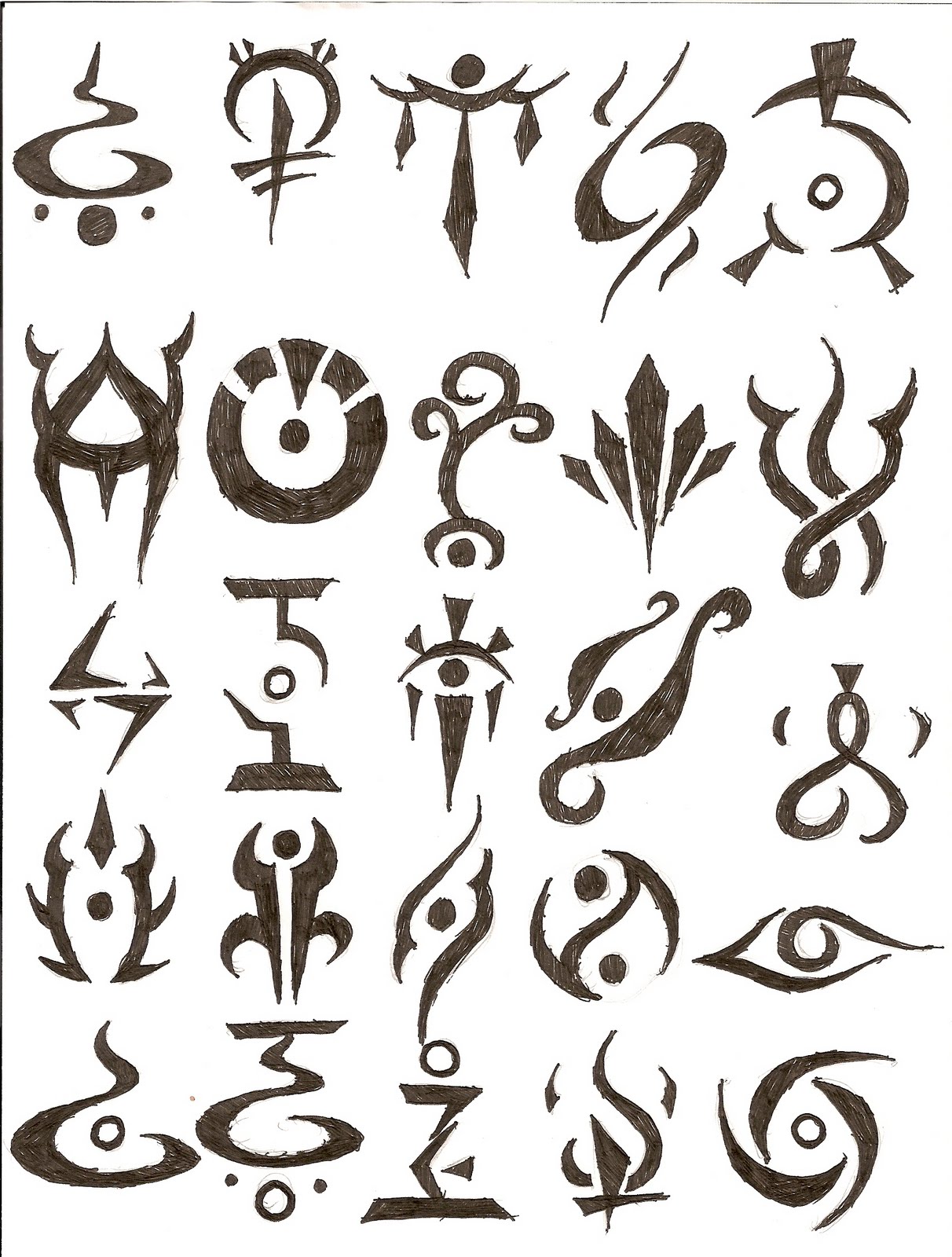
Discover The Enigmatic Language Of Tattoos: Symbols Unraveled For 2023
The phrase "tattoo symbols" refers to the use of images, designs, and other marks on the skin as a form of personal expression and cultural significance. These symbols can vary widely in design and meaning, from simple shapes and motifs to complex and elaborate compositions. They can be used to represent a person's heritage, beliefs, affiliations, or personal experiences.
Tattoo symbols have been used throughout human history in various cultures around the world. They have served as markers of, status, and achievement, as well as symbols of protection, good luck, and religious devotion. In recent years, tattoos have become increasingly popular as a form of personal expression and body art.
The main article will explore the diverse world of tattoo symbols, examining their history, meanings, and cultural significance. It will also provide a brief overview of the art and practice of tattooing, as well as discuss the various factors to consider when choosing a tattoo symbol.
Tattoo Symbols
Tattoo symbols are a diverse and fascinating form of personal expression, with a rich history and cultural significance. They can be used to represent a wide range of ideas and concepts, from personal beliefs and experiences to cultural heritage and religious devotion.
- Cultural Identity: Tattoos can be used to represent a person's cultural heritage or affiliation.
- Personal Expression: Tattoos can be used to express one's individuality and unique identity.
- Religious Symbolism: Tattoos can be used to represent religious beliefs and practices.
- Protection and Good Luck: Tattoos have been used throughout history as a form of protection and to bring good luck.
- Art and Adornment: Tattoos can be seen as a form of art and body adornment.
- Social Status: Tattoos have been used in some cultures to indicate social status or rank.
- Ritual and Ceremony: Tattoos can play a role in cultural rituals and ceremonies.
- Healing and Transformation: Tattoos can be used as a form of healing and transformation.
- Fashion and Trend: Tattoos have become increasingly popular in recent years as a fashion statement.
These key aspects of tattoo symbols highlight their diverse and multifaceted nature. They can be seen as a form of personal expression, cultural identity, religious devotion, and art. Tattoos can also serve a variety of functions, from protection and good luck to healing and transformation. As a result, tattoo symbols have a rich and complex history, and they continue to be an important part of cultures around the world.
Cultural Identity
Cultural identity is a complex and multifaceted concept that encompasses a person's sense of belonging to a particular group or culture. This can be based on factors such as shared language, religion, ethnicity, or national origin. Tattoos can be a powerful way to express one's cultural identity and to connect with others who share a similar heritage.
Tattoo symbols are often used to represent cultural identity. These symbols can be anything from simple designs to complex and elaborate compositions. They can be used to represent a person's tribe, clan, or family. They can also be used to represent a person's religious beliefs or spiritual practices.
For example, the Maori people of New Zealand have a long tradition of tattooing. Maori tattoos are often used to represent a person's family lineage and social status. The designs used in Maori tattoos are often based on the natural world, and they can be very intricate and beautiful.
Tattoos can be a powerful way to express one's cultural identity and to connect with others who share a similar heritage. They can also be a beautiful and unique form of body art.
Personal Expression
Tattoos have become increasingly popular in recent years as a form of personal expression. People choose to get tattoos for a variety of reasons, including to express their individuality, to commemorate a special event or person, or simply to adorn their bodies with beautiful art.
- Symbolism: Tattoos can be used to symbolize a person's beliefs, values, or experiences. For example, a person who is passionate about music might get a tattoo of a musical instrument or a favorite band logo.
- Identity: Tattoos can be used to express a person's unique identity. For example, a person who identifies as non-binary might get a tattoo of the non-binary pride flag.
- Art: Tattoos can be seen as a form of art. People who get tattoos often choose designs that are visually appealing and meaningful to them.
- Memory: Tattoos can be used to commemorate a special event or person. For example, a person who has lost a loved one might get a tattoo of their name or a symbol that represents them.
Tattoos are a powerful way for people to express themselves and to connect with others who share their interests and values. They can also be a beautiful and unique form of body art.
Religious Symbolism
Religious symbolism is a powerful way to express one's faith and devotion. Tattoos have been used for centuries to represent religious beliefs and practices. They can be a way to connect with the divine, to show one's commitment to a particular religion, or to commemorate a special religious event.
One of the most common types of religious tattoos is the cross. The cross is a symbol of Christianity, and it is often used to represent Jesus Christ's sacrifice on the cross. Other popular religious tattoo symbols include the Star of David (Judaism), the Om symbol (Hinduism), and the lotus flower (Buddhism).
Religious tattoos can be a beautiful and meaningful way to express one's faith. They can also be a way to connect with others who share the same beliefs. However, it is important to remember that religious tattoos are not always appropriate. For example, it would not be appropriate to get a tattoo of a religious symbol on one's face or neck.
If you are considering getting a religious tattoo, it is important to do your research and to choose a design that is meaningful to you. You should also be aware of the potential risks and complications associated with tattoos.
Protection and Good Luck
The connection between "Protection and Good Luck: Tattoos have been used throughout history as a form of protection and to bring good luck." and "tattoos symbols" is a significant one. Tattoos have been used for centuries to ward off evil spirits, bring good fortune, and protect the wearer from harm. Many cultures around the world have their own unique tattoo symbols that are believed to have protective or good luck-bringing powers.
For example, in many Southeast Asian cultures, the tiger is seen as a powerful and protective animal. As a result, tiger tattoos are often used to ward off evil spirits and protect the wearer from harm. In other cultures, the lotus flower is seen as a symbol of purity and good luck. Lotus flower tattoos are often used to bring good fortune and protect the wearer from negative energy.
The belief in the protective and good luck-bringing powers of tattoos is still strong in many cultures today. Many people choose to get tattoos of symbols that are believed to have protective or good luck-bringing powers. These tattoos can be a source of comfort and strength for the wearer, and they can also serve as a reminder of the importance of protection and good luck in life.
The understanding of the connection between "Protection and Good Luck: Tattoos have been used throughout history as a form of protection and to bring good luck." and "tattoos symbols" is important for several reasons. First, it provides insight into the cultural and historical significance of tattoos. Second, it can help us to understand the motivations of people who choose to get tattoos. Third, it can help us to appreciate the beauty and diversity of tattoo art.
Art and Adornment
The connection between art and adornment and tattoo symbols is intricate and multifaceted. Tattoos have been used for centuries as a form of personal expression and decoration, and the symbols used in tattoos often carry deep cultural and personal significance.
As a form of art, tattoos can be highly creative and expressive. Tattoo artists use a variety of techniques to create unique and beautiful designs, and the human body becomes a canvas for their artistic expression. Tattoo symbols can be simple or complex, abstract or realistic, and they can be used to create a wide range of effects, from delicate and subtle to bold and dramatic.
In addition to their artistic value, tattoos can also be seen as a form of body adornment. Tattoos can be used to enhance one's physical appearance, and they can be used to express one's personality and style. Tattoo symbols can be chosen to complement one's clothing, jewelry, or other accessories, and they can be used to create a cohesive and stylish look.
The connection between art and adornment and tattoo symbols is important for several reasons. First, it helps us to understand the cultural and historical significance of tattoos. Tattoos have been used for centuries to express cultural identity, religious beliefs, and personal style, and the symbols used in tattoos often carry deep meaning. Second, it can help us to appreciate the beauty and diversity of tattoo art. Tattoo artists are highly skilled and creative individuals, and they use a variety of techniques to create unique and beautiful designs. Third, it can help us to understand the motivations of people who choose to get tattoos. Tattoos can be a way to express oneself creatively, to adorn one's body, or to connect with one's culture or heritage.
Social Status
In many cultures throughout history, tattoos have been used to indicate a person's social status or rank. This practice is thought to have originated from the use of tattoos to identify members of different tribes or clans. Over time, tattoos became more elaborate and complex, and they began to be used to denote a person's position within a social hierarchy.
- Lineage and Ancestry: In some cultures, tattoos were used to trace a person's lineage and ancestry. The designs and symbols used in these tattoos could indicate a person's clan, family, or tribe.
- Occupation and Profession: Tattoos were also used to indicate a person's occupation or profession. For example, in ancient Egypt, priests and priestesses often had tattoos that identified their roles within the temple.
- Military Rank and Achievements: In many cultures, tattoos were used to denote military rank and achievements. For example, in ancient Rome, soldiers who had been victorious in battle often received tattoos that commemorated their victories.
- Religious Status: In some cultures, tattoos were used to indicate a person's religious status. For example, in ancient India, Hindus often had tattoos that represented their devotion to particular gods or goddesses.
The connection between social status and tattoos is a complex and fascinating one. Tattoos can provide valuable insights into the social and cultural values of a particular time and place. They can also be a source of pride and identity for the people who wear them.
Ritual and Ceremony
Tattoos have long been associated with cultural rituals and ceremonies around the world. In many cultures, tattoos are seen as a way to connect with the divine, to mark important life events, or to commemorate special occasions. Tattoo symbols play a vital role in these rituals and ceremonies, as they can represent the specific beliefs and values of the culture.
For example, in the Maori culture of New Zealand, tattoos are known as "ta moko" and are considered to be a sacred art form. Maori tattoos are often used to represent a person's lineage, status, and achievements. The designs used in Maori tattoos are highly symbolic, and each element of the design has a specific meaning.
In Japan, tattoos are also deeply rooted in cultural rituals and ceremonies. Traditional Japanese tattoos, known as "irezumi," are often large and elaborate, and they often depict scenes from Japanese mythology or folklore. Irezumi tattoos are often associated with the yakuza, the Japanese mafia, but they are also popular among non-yakuza members.
The connection between ritual and ceremony and tattoos is a complex and fascinating one. Tattoos can provide valuable insights into the cultural and religious beliefs of a particular people. They can also be a source of pride and identity for the people who wear them.
Healing and Transformation
Tattoos have long been associated with healing and transformation. In many cultures, tattoos are seen as a way to mark important life events, to commemorate special occasions, or to connect with the divine. Tattoo symbols play a vital role in these rituals and ceremonies, as they can represent the specific beliefs and values of the culture.
- Physical Healing: Tattoos can be used to promote physical healing. For example, tattoos can be used to cover scars or birthmarks. They can also be used to create the illusion of symmetry or to balance out the body.
- Emotional Healing: Tattoos can also be used to promote emotional healing. For example, tattoos can be used to commemorate a loved one who has passed away. They can also be used to represent a person's journey through a difficult time.
- Spiritual Transformation: Tattoos can also be used to promote spiritual transformation. For example, tattoos can be used to represent a person's spiritual beliefs or practices. They can also be used to connect with the divine.
- Personal Growth: Tattoos can also be used to promote personal growth. For example, tattoos can be used to represent a person's goals or aspirations. They can also be used to remind a person of their strengths and weaknesses.
The connection between healing and transformation and tattoos is a complex and fascinating one. Tattoos can provide valuable insights into the cultural and religious beliefs of a particular people. They can also be a source of pride and identity for the people who wear them.
Fashion and Trend
The connection between "Fashion and Trend: Tattoos have become increasingly popular in recent years as a fashion statement." and "tattoos symbols" is a complex and multifaceted one. Tattoos have long been used as a form of personal expression, cultural identity, and religious devotion. However, in recent years, tattoos have become increasingly popular as a fashion statement, and tattoo symbols have played a major role in this trend.
- Celebrity Influence: Celebrities have played a major role in popularizing tattoos as a fashion statement. Many celebrities have visible tattoos, and their fans often emulate their style. This has helped to make tattoos more acceptable and desirable to a wider range of people.
- Fashion Designers: Fashion designers have also played a role in the popularity of tattoos as a fashion statement. In recent years, many fashion designers have incorporated tattoos into their designs. This has helped to make tattoos more fashionable and stylish.
- Social Media: Social media has also played a role in the popularity of tattoos as a fashion statement. Social media platforms such as Instagram and Pinterest have made it easy for people to share photos of their tattoos. This has helped to inspire others to get tattoos and has also made it easier for people to find tattoo artists.
- Changing Attitudes: Changing attitudes towards tattoos have also contributed to their popularity as a fashion statement. In the past, tattoos were often associated with negative stereotypes. However, in recent years, attitudes towards tattoos have become more positive. Tattoos are now seen as a form of self-expression and creativity.
The connection between "Fashion and Trend: Tattoos have become increasingly popular in recent years as a fashion statement." and "tattoos symbols" is a significant one. Tattoos have become a mainstream fashion trend, and tattoo symbols have played a major role in this trend. Tattoos are now seen as a form of self-expression, creativity, and individuality.
Frequently Asked Questions About Tattoo Symbols
Tattoos have been used for centuries to express personal identity, cultural heritage, and religious beliefs. Tattoo symbols can be simple or complex, and they can carry a variety of meanings. Here are some of the most frequently asked questions about tattoo symbols:
Question 1: What is the most popular tattoo symbol?
There is no one most popular tattoo symbol, as the popularity of symbols varies depending on culture, personal preference, and trends. However, some of the most common tattoo symbols include the cross (Christianity), the Star of David (Judaism), the Om symbol (Hinduism), and the lotus flower (Buddhism). Animals, such as lions, tigers, and dragons, are also popular tattoo symbols.
Question 2: What do different tattoo symbols mean?
The meaning of a tattoo symbol can vary depending on the culture in which it is used and the individual who wears it. However, some common meanings of tattoo symbols include:
- Love and relationships: Hearts, roses, and infinity symbols
- Good luck and protection: Four-leaf clovers, horseshoes, and evil eyes
- Strength and courage: Lions, tigers, and dragons
- Faith and spirituality: Crosses, Stars of David, and Om symbols
- Personal growth and transformation: Butterflies, phoenixes, and lotus flowers
Question 3: Where is the best place to get a tattoo?
The best place to get a tattoo is a licensed and reputable tattoo parlor. Tattoo parlors are regulated by state and local health departments, and they must adhere to strict safety and sanitation standards. It is important to research different tattoo parlors and choose one that has a good reputation and experienced artists.
Question 4: How much does a tattoo cost?
The cost of a tattoo varies depending on the size, complexity, and placement of the tattoo. It is important to get a price quote from the tattoo artist before getting a tattoo.
Question 5: How do I care for a new tattoo?
It is important to follow the tattoo artist's instructions for caring for a new tattoo. Generally, this will involve keeping the tattoo clean and dry, and avoiding sun exposure. It is also important to avoid picking or scratching the tattoo.
Question 6: Can I remove a tattoo if I don't like it?
Yes, it is possible to remove a tattoo, but it can be a costly and time-consuming process. There are a number of different tattoo removal methods available, and the best method for you will depend on the size, color, and age of the tattoo.
These are just a few of the most frequently asked questions about tattoo symbols. If you are considering getting a tattoo, it is important to do your research and choose a symbol that is meaningful to you.
Summary: Tattoo symbols can be a beautiful and meaningful way to express yourself. By understanding the different meanings of tattoo symbols, you can choose a symbol that is perfect for you.
Transition: If you are interested in learning more about tattoo symbols, there are a number of resources available online and in libraries.
Tips for Choosing Tattoo Symbols
Tattoo symbols can be a beautiful and meaningful way to express yourself. However, it is important to choose a symbol that is right for you. Here are five tips to help you choose the perfect tattoo symbol:
Tip 1: Consider your personal values and beliefs. What is important to you in life? What do you stand for? Your tattoo symbol should reflect your personal values and beliefs.
Tip 2: Think about your cultural heritage. Your cultural heritage can be a great source of inspiration for tattoo symbols. Many cultures have their own unique tattoo symbols that represent their history, traditions, and beliefs.
Tip 3: Research different tattoo symbols. There are a wide variety of tattoo symbols to choose from. It is important to research different symbols and their meanings before making a decision. This will help you choose a symbol that is meaningful to you.
Tip 4: Consider the placement of your tattoo. The placement of your tattoo can affect its meaning. For example, a tattoo on your chest may be seen as more personal than a tattoo on your arm.
Tip 5: Choose a tattoo artist who you trust. A good tattoo artist will be able to help you choose the perfect tattoo symbol and create a beautiful and meaningful tattoo for you.
Summary: Choosing the right tattoo symbol is an important decision. By following these tips, you can choose a symbol that is meaningful to you and that you will be happy with for years to come.
Transition: If you are ready to get a tattoo, the next step is to find a reputable tattoo artist who can help you create the perfect tattoo.
Conclusion
Tattoo symbols are a diverse and fascinating form of personal expression, with a rich history and cultural significance. They can be used to represent a wide range of ideas and concepts, from personal beliefs and experiences to cultural heritage and religious devotion.
The exploration of "tattoos symbols" in this article has provided a comprehensive overview of the different types of symbols used in tattoos, their meanings, and their cultural significance. It has also discussed the importance of choosing a tattoo symbol that is meaningful to you and that you will be happy with for years to come.
Whether you are considering getting your first tattoo or you are a seasoned collector, it is important to remember that tattoos are a permanent form of body art. As such, it is important to choose a symbol that is meaningful to you and that you will be proud to wear for the rest of your life.
Unveiling The Extraordinary Journey Of Derrick Rose's Wife
Unveiling The Secrets: Pablo Escobar's Death Picture Explored
Unleash Limitless Fun: Uncover The Ultimate Guide To Outdoor Games With Friends!